
Discover the El Nino and La Nina Effects on global weather, climate, agriculture, droughts, floods, and extreme temperatures. Learn how these powerful climate patterns impact communities and ecosystems worldwide.
What Are El Nino and La Nina
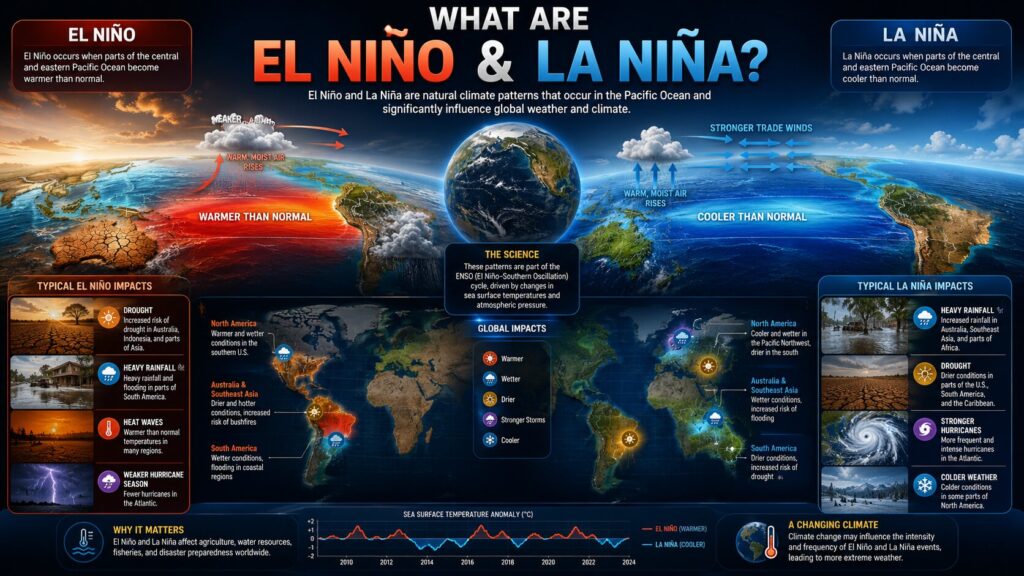
are natural climate patterns in the Pacific Ocean that influence weather conditions worldwide. These events occur when sea surface temperatures in the equatorial Pacific are unusually warm or cool, affecting rainfall, temperatures, storms, and seasonal weather patterns across many countries.
El Nino Effects
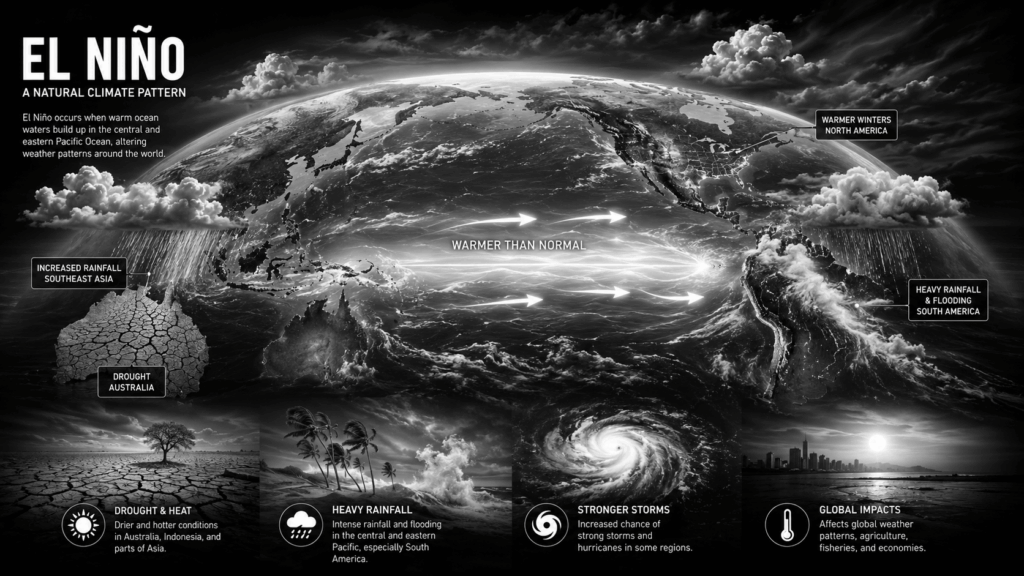
During an El Nino event, sea surface temperatures in the central and eastern Pacific Ocean rise above average. This can disrupt normal wind patterns and alter weather conditions worldwide. Some regions may experience hotter temperatures, droughts, heavy rainfall, or an increased risk of extreme weather events.
La Nina Effects
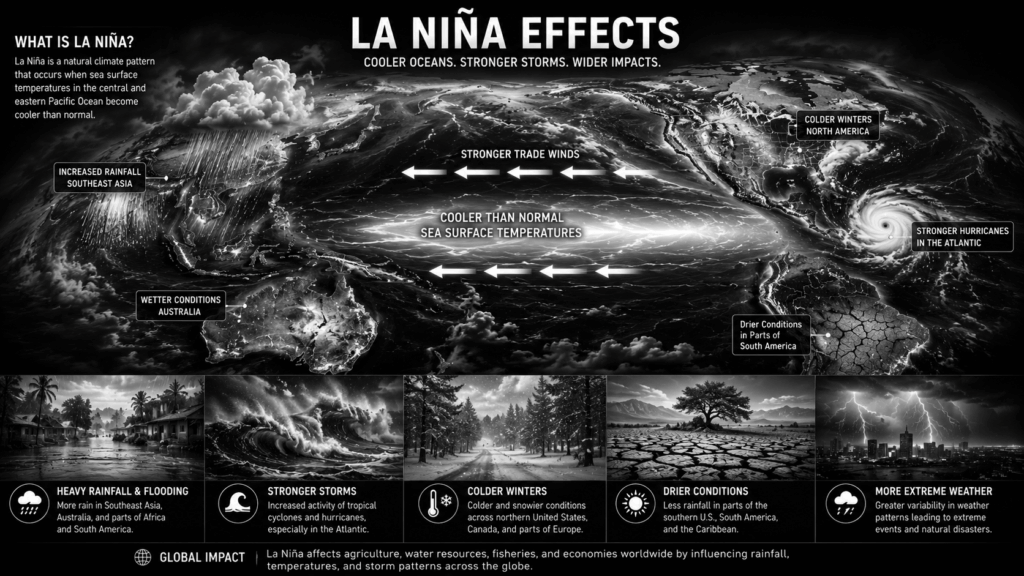
La Nina occurs when sea surface temperatures in the same Pacific region become cooler than average. It typically strengthens trade winds and often produces weather patterns opposite to those associated with El Nino. Depending on the region, La Nina can bring increased rainfall, cooler temperatures, or more active storm seasons.
El Nino Effects
The effects can be significant and widespread:
1. Increased Global Temperatures-El Nino
often contributes to warmer global temperatures, intensifying the effects of global warming.
2. Drought Conditions
Many regions experience reduced rainfall, leading to droughts, water shortages, and agricultural losses.
3. Increased Wildfire Risk
Hotter and drier conditions can increase the likelihood of forest fires and bushfires.
4. Changes in Marine Ecosystems
Warmer ocean temperatures affect fish populations, coral reefs, and marine biodiversity.
5. Extreme Weather Events-El Nino
can contribute to heatwaves, stronger storms, and unusual weather patterns in different parts of the world.
La Nina Effects
The La Nina effects can be equally powerful but often produce opposite outcomes.
1. Cooler Global Temperatures
La Niña generally has a temporary cooling influence on global average temperatures.
2. Increased Rainfall
Many regions experience above-average rainfall, leading to flooding and landslides.
3. Stronger Tropical Storm Activity
Certain ocean basins may see more hurricanes, cyclones, and tropical storms during La Nina periods.
4. Agricultural Benefits and Challenges
While increased rainfall can support crop growth in some areas, excessive rain can damage crops and infrastructure elsewhere.
5. Shifts in Climate Patterns
La Nina can alter weather systems across continents, affecting seasonal forecasts and water resources.